Lake Lanier Dock Permits Explained: A Buyer's Guide
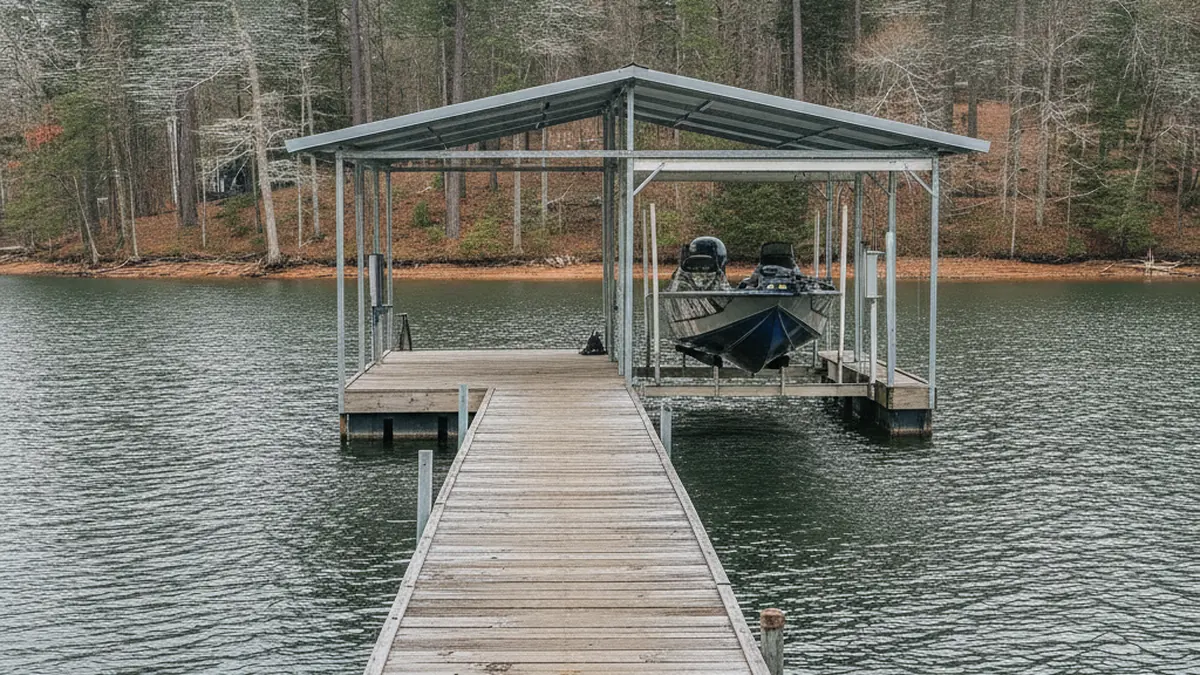
Lake Lanier Dock Permits Explained: A Buyer's Guide
Quick answer (TL;DR)
Yes. Every private dock, boat lift, and shoreline structure on Lake Lanier requires a permit from the U.S. Army Corps of Engineers, which owns the land the lake sits on. The permit is tied to the property, not the person, and the Corps must review it when a home changes hands — it does not transfer automatically. Before closing on any Lanier waterfront home, confirm the dock permit is current, valid, and transferable. Call Gold Peach Realty at (770) 283-1223 to search waterfront inventory with permit status verified.
A dock permit on Lake Lanier is a federal authorization from the U.S. Army Corps of Engineers to keep a private dock on Corps-owned shoreline. It is attached to the property, must be reviewed when ownership changes, and can lapse — which makes verifying it a required step in any waterfront purchase.
Permit fees, processing times, dock-class rules, and price figures in this article are described in general ranges and are subject to change by the U.S. Army Corps of Engineers and by market conditions. Confirm current permit requirements and fees directly with the Corps' Lake Sidney Lanier Project Office, and verify any property's specific permit status with your real estate attorney, before relying on any figure for an offer or financial decision.
Thinking about a Lake Lanier waterfront home?
Gold Peach Realty works Lake Lanier year-round. We know which listings have active Army Corps dock permits, which communities allow short-term rentals, and how to read the shoreline before you write an offer.
Talk to a Lake Lanier specialistA private dock is the single feature that most separates one Lake Lanier home from another — and it is also the one feature governed not by the county, the HOA, or the seller, but by the federal government. Because the U.S. Army Corps of Engineers owns the shoreline, a dock you can see from a listing photo is not automatically a dock you are allowed to keep and use. Understanding how the permit works is the difference between a smooth waterfront closing and an expensive surprise. If you are early in your search, start with the market overview on our Lake Lanier real estate page, then use this guide for the dock-permit layer specifically.
Why Lake Lanier docks need a federal permit
Lake Lanier is not a natural lake. It was created in the 1950s when the U.S. Army Corps of Engineers dammed the Chattahoochee River at Buford Dam. Because the federal government built the reservoir for flood control, hydropower, water supply, and navigation, the Corps owns the lake bed and a band of land around the shoreline. Private property lines on Lanier typically stop short of the water — the strip between a homeowner's lot and the lake is Corps land.
That ownership structure is why a dock is a permitted use rather than an owned improvement. When a homeowner puts a dock on the water, they are placing a private structure on public, federally managed land. The Corps allows this through a permit program, but the permit comes with conditions, a footprint, and rules about what the structure may be and how the shoreline around it may be used.
On Lake Lanier you own the dock structure itself, but not the land or water it occupies. What the permit grants is authorization to keep that structure on Corps-managed shoreline under specific conditions. If the permit lapses or is revoked, the right to keep the dock in place goes with it — which is exactly why permit status, not just the presence of a dock, is what matters at closing.
Who manages Lake Lanier and its docks
Lake Sidney Lanier is administered by the U.S. Army Corps of Engineers, Mobile District, through the on-site Lake Sidney Lanier Project Management Office at Buford Dam. That office is the authority that issues, reviews, and enforces shoreline and dock permits on the lake. (Buyers sometimes assume a different Corps district handles Lanier; the Mobile District is the correct office to contact for dock and shoreline questions.)
Practically, that means the people who decide whether a dock can stay, be modified, or be transferred are federal staff following a national shoreline-management framework, not a local permitting desk. It is a different process from pulling a county building permit, and it moves on a federal timeline. Local specialists who close Lanier waterfront transactions regularly build that reality into every contract.
What kinds of dock permits exist
Not every Lake Lanier home comes with the same water rights. The inventory sorts into a few clear categories, and the category changes both the permit picture and the price.
| Access type | Dock situation | What to verify |
|---|---|---|
| Lakefront, private dock permitted | Dock in place under an existing Corps permit | Permit is current, valid, and transferable to you |
| Lakefront, dock-eligible | No dock yet, but the shoreline classification may allow one | Whether the segment is open to new dock permits at all |
| Lake-view, no dock rights | Water views, no private shoreline access | Whether a community dock or slip is available instead |
| Community / shared dock | HOA or subdivision holds a group permit | Slip assignment, waitlist, and shared-permit terms |
| Estate with boathouse | Larger permitted structure, possibly covered | That the structure as built matches the permitted footprint |
The Corps classifies shoreline segments, and not every stretch is open to new private docks. A lot that looks like it should support a dock may sit on a segment where new permits are not issued. That is why "lakefront" and "dock-permitted" are two separate questions — and both need answering before you fall for the view.
How the Army Corps dock permit process works
Whether you are transferring an existing permit into your name or applying for a new one, the process follows the same broad shape. Treat these as the sequence to plan around, and confirm the current specifics with the Lake Sidney Lanier Project Office.
- Confirm the shoreline classification. Establish whether the property's shoreline segment permits a private dock at all. This is the gating question — everything else depends on it.
- Establish the existing permit's status. For a home with a dock already in place, get the permit number and confirm with the Corps that it is active, matches the structure on the water, and is eligible to transfer.
- Submit the application to the Corps. New permits and transfers are reviewed by the Lake Sidney Lanier Project Office. Applications include property and structure details and must conform to the current shoreline rules.
- Allow for Corps review time. Federal review is not instant. Transfers of clean, existing permits generally move faster than new applications, but both take time — plan your closing and use-of-dock timeline accordingly.
- Receive the authorization before relying on the dock. A dock is not legally usable by you until the Corps has authorized it under your ownership. Do not assume continuity just because the structure never left the water.
Docks can sit on the water with a lapsed, non-transferable, or non-conforming permit. The only reliable confirmation comes from the Corps' own records for that specific property. Make written permit verification a condition of your offer, handled by a real estate attorney experienced with Lake Lanier closings — not an assumption you carry into due diligence.
Do dock permits transfer when you buy?
This is the question that catches the most buyers, so it is worth stating plainly: the permit is tied to the property, but it does not transfer to a new owner automatically. When a Lanier waterfront home sells, the Corps must review and reissue or transfer the dock authorization to the new owner. Skipping that step can leave a brand-new homeowner with a dock they technically are not authorized to use.
A few situations make transfers more complicated: a permit that lapsed while the home sat vacant, a dock that was modified or enlarged without an updated permit, or a structure that no longer conforms to current shoreline rules. Any of these can turn a routine transfer into a delay or a required correction. None of them is visible in a listing — they surface only when someone checks the Corps' records.
You may be required to bring the dock into compliance, reapply, or in some cases remove a non-conforming structure at your expense before a new permit is issued. That is why permit status belongs in the offer and due-diligence stage, not the closing table. A clean, transferable permit is part of the value you are paying for on a waterfront home — treat it that way.
What a Lake Lanier dock permit costs
The Corps charges a permit fee, and the amount depends on the permit type and current federal fee schedule. Fees change, so rather than quote a figure that may be stale, the honest answer is: budget for a recurring federal permit fee and confirm the current amount with the Lake Sidney Lanier Project Office for the specific dock class. Treat it as an ongoing cost of waterfront ownership, not a one-time closing line item.
The permit fee is rarely the number that matters most, though. The larger costs cluster elsewhere:
- Bringing a non-conforming dock into compliance — modifications required by the Corps before a permit is reissued.
- Dock condition and repair — flotation, decking, framing, and electrical all age in a lake environment.
- Water depth work — some coves shoal over time; keeping a slip usable can require attention at low lake levels.
- Attorney and due-diligence time — an experienced closing attorney is worth the fee on any permitted-dock purchase.
For the home itself, waterfront pricing on Lanier runs well above inland Hall County, and true dock-permitted lakefront carries the steepest premium because the Corps controls supply. If you are weighing what you can afford and want to understand your equity position first, start with a free home valuation before you shop the waterfront.
What the Shoreline Management Plan allows
Dock permits do not exist in isolation — they sit inside the Corps' Shoreline Management Plan for Lake Lanier, the framework that governs what may happen on the federally owned strip between private lots and the water. The plan classifies shoreline, sets what structures are allowed, and controls activities like vegetation removal and mowing on Corps land.
For a buyer, the practical takeaways are simple. You cannot clear, mow, or landscape Corps shoreline as if it were your backyard without authorization. You cannot expand a dock, add a slip, or build a boathouse beyond the permitted footprint without Corps approval. And a previous owner who did any of those things without authorization can leave a compliance problem attached to the property. The Shoreline Management Plan is the reason a Lanier waterfront lot behaves differently from private-lake or oceanfront property, and it is worth reading the relevant sections — or having your agent and attorney summarize them — before you commit.
The authoritative source for dock permits, fees, and shoreline rules on Lake Lanier is the U.S. Army Corps of Engineers, Mobile District, via the Lake Sidney Lanier Project Office. Confirm current requirements there, and have your attorney verify the specific property's permit record in writing. Nothing in this article replaces that verification.
What buyers should verify before closing
If you take one thing from this guide, make it a checklist. These are the items that keep a Lanier waterfront purchase from turning into a permit problem after you own it.
- Permit exists and is current. Get the permit number and confirm active status with the Corps for that specific property.
- The permit is transferable to you. Confirm there is nothing blocking transfer — no lapse, revocation, or unresolved violation.
- The structure matches the permit. The dock as built should match the permitted type, size, and footprint. Unpermitted additions become your problem.
- The shoreline segment allows the dock. Confirm the classification supports the dock now and any changes you plan later.
- Water depth is usable. Check depth at the slip at low lake levels if you intend to keep a powerboat there.
- HOA and short-term-rental rules fit your plan. STR policies vary by community; confirm before the due-diligence window closes if rental income matters.
- Your closing team knows Lake Lanier. Use an agent and a real estate attorney who have closed permitted-dock transactions on this lake specifically.
Buyers who run this list close with confidence. Buyers who skip it are the ones who discover a permit issue after the keys change hands. For the wider recreation and lifestyle side of lake ownership, our guides to boating on Lake Lanier and the best Lake Lanier beaches for families round out what day-to-day life on the water actually looks like.
Verify the dock before you fall for the view
Gold Peach Realty checks Army Corps permit status as part of every Lake Lanier waterfront search. Call (770) 283-1223 or browse current Lake Lanier listings.
Start your Lake Lanier searchPerspective from the field
"On Lake Lanier the dock permit is the whole ballgame. Two homes can look identical from the water, and one has a clean, transferable Army Corps permit while the other has a lapsed one and a structure that no longer conforms. The buyers who do well here treat permit verification as seriously as the home inspection — because on this lake, it is one. Get the permit confirmed in writing before you're emotionally attached to the property."
Nicole Van den Bergh, Gold Peach Realty, North GeorgiaFrequently asked questions
Do you need a permit for a dock on Lake Lanier?
Yes. Every private dock, boat lift, and shoreline structure on Lake Lanier requires a permit from the U.S. Army Corps of Engineers, which owns the shoreline. Building or keeping a dock without a valid permit is not allowed, and permit status is tied to the specific property.
Does a Lake Lanier dock permit transfer to the new owner when I buy?
Not automatically. The permit is attached to the property, but the Army Corps must review and reissue or transfer the authorization to the new owner. Confirm the permit is current and transferable during due diligence, before closing, rather than assuming it carries over.
Which Army Corps of Engineers office manages Lake Lanier?
Lake Sidney Lanier is managed by the U.S. Army Corps of Engineers, Mobile District, through the on-site Lake Sidney Lanier Project Office at Buford Dam. That office issues and reviews dock and shoreline permits for the lake.
Can every Lake Lanier lakefront lot get a dock?
No. The Corps classifies shoreline segments, and not all of them are open to new private docks. A lakefront lot may sit on a segment where new dock permits are not issued. Always confirm the shoreline classification before assuming a dock is possible.
How long does it take to get or transfer a dock permit on Lake Lanier?
It varies. Transferring a clean, existing permit generally moves faster than a new application, but both are federal reviews that take time rather than happening instantly. Build the timeline into your closing and plan not to rely on the dock until the Corps has authorized it under your ownership.
What does a Lake Lanier dock permit cost?
The Corps charges a permit fee that depends on dock class and the current federal fee schedule, and it recurs rather than being a one-time cost. Because fees change, confirm the current amount with the Lake Sidney Lanier Project Office. Often the larger costs are bringing a non-conforming dock into compliance or repairing an aging structure, not the fee itself.
Can I expand a dock or add a boathouse on Lake Lanier?
Only with Corps approval. Expanding a dock, adding a slip, or building a boathouse beyond the permitted footprint requires a new or amended permit under the Shoreline Management Plan. Modifications made without authorization can create compliance problems that transfer with the property.
Can I clear or landscape the shoreline in front of my Lake Lanier home?
Generally not without authorization. The strip between a private lot and the water is Corps land governed by the Shoreline Management Plan, which controls vegetation removal and mowing. Treating it as private yard without approval can result in a violation. Confirm what is allowed for the specific segment before doing any shoreline work.
What happens if a dock permit lapsed on a home I want to buy?
A lapsed permit means the dock is not currently authorized. Depending on the situation you may need to reapply, bring the structure into compliance, or address a non-conforming dock before a new permit is issued. Identify this during due diligence so the cost and timeline are negotiated before you close, not discovered after.
Is a home with a permitted dock worth more on Lake Lanier?
Typically yes. Because the Corps controls the shoreline and limits new docks, a home with a valid, transferable dock permit carries a premium over lake-view or community-access properties. The permit is part of what you are paying for, which is why confirming it is genuine and transferable protects your investment.
Do community docks on Lake Lanier need permits too?
Yes. Community and shared docks operate under permits held by the HOA or subdivision rather than an individual owner. If you are buying into a community-access neighborhood, confirm the shared-permit terms, slip assignment, and any waitlist, since your water access depends on that group permit rather than a private one.
How do I find Lake Lanier homes with a valid dock permit?
Work with a local agent who checks Army Corps permit status as part of the search. Online portals show docks in photos but rarely confirm permit validity. Gold Peach Realty can search current Lake Lanier inventory filtered to your criteria and verify dock permit status before you tour. Call (770) 283-1223 to start.
All information in this article is believed to be reliable but is not guaranteed and is subject to change without notice. U.S. Army Corps of Engineers dock and shoreline permit requirements, fees, processing times, the Shoreline Management Plan, HOA rules, tax rates, and price ranges should be independently verified with the Corps' Lake Sidney Lanier Project Office and the buyer's licensed representative before any real estate decision. This article is for informational purposes and does not constitute legal, financial, or investment advice. Gold Peach Realty is a licensed Georgia real estate brokerage. Equal Housing Opportunity.
Updated:
Categories
- All Blogs (663)
- Achasta Golf Community (78)
- Cleveland, GA (46)
- Dacula, GA (43)
- Dahlonega GA (167)
- Dawsonville, GA (46)
- Forsyth County, GA (2)
- Gainesville, GA (47)
- Gold Peach Realty (36)
- Helen, GA (44)
- Home Buying Tips (42)
- Home Décor And Interior Design (7)
- Home Improvement Tips (15)
- Home Selling Tips (29)
- Homes For Sale (56)
- Lake Lanier, GA (72)
- Land & Acreage (2)
- Local Events (13)
- Local Guides (27)
- Luxury Real Estate (3)
- Market Reports (17)
- Mortgage And Finance Tips (27)
- New Construction (2)
- North Georgia (45)
- Relocating To North Georgia (19)
Recent Posts









GET MORE INFORMATION