What Should You Know Before Buying a Lake Lanier Waterfront Home in Dawsonville?
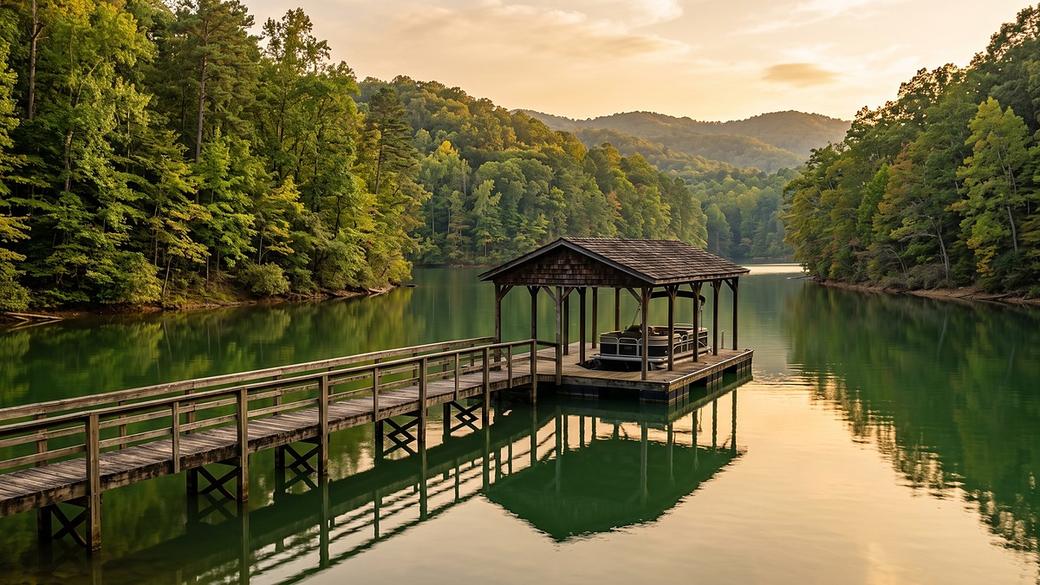
What Should You Know Before Buying a Lake Lanier Waterfront Home in Dawsonville?
TL;DR, the quick answer
Dawsonville waterfront sits on the upper end of Lake Lanier, where the shoreline is federal land and the dock is not part of the sale the way a garage is. Federal rule makes a Shoreline Use Permit non-transferable and void when the property changes hands, and the permit conditions at 36 CFR 327.30 give the new owner 14 days to apply for their own. That single clock is the thing most Dawsonville lake buyers learn too late.
Every rule quoted below about docks and shoreline comes from the federal regulation itself, Title 36 of the Code of Federal Regulations, Part 327, Section 327.30, read at the eCFR at the time of writing. Every park detail comes from Dawson County's own lake parks page. This article prints no lake elevation number and no current water level, because the US Army Corps of Engineers pages that publish those figures for Lake Sidney Lanier would not load, and the one Corps table that did load publishes record high and record low levels rather than full pool. We have left it out instead of repeating a number from a site that does not issue it. This article also prints no price, no dock premium, and no inventory count, because those change daily and are better read from live listing data. Confirm anything that affects a purchase with the agency or professional that owns the answer.
Looking at Lake Lanier waterfront in Dawsonville?
Gold Peach Realty works the Dawson County side of the lake and knows which questions to ask about a dock before you write an offer, not after.
Browse Dawsonville homes for saleTable of Contents
- Where the waterfront actually is in Dawsonville
- Does the dock come with the house?
- Why the shape of your cove sets the size of your dock
- Can you add a dock where there is not one already?
- What lake access looks like on the Dawson County side
- Waterfront, water view, and lake access are three different purchases
- What to verify before you write an offer
- Frequently asked questions
Buyers searching for Dawsonville Lake Lanier waterfront are usually picturing the same thing: a back lawn that runs down to the water and a dock at the bottom of it. That picture is achievable in Dawson County. What surprises people is how little of it is governed by the deed they are about to sign, and how much of it is governed by a federal regulation and a permit that is written in someone else's name.
This guide covers the part of a Dawsonville lake purchase that a listing photograph cannot show you. It is deliberately narrow. It is about shoreline, docks, and access on the Dawson County side of Lake Lanier, and about the questions worth answering while you still have a due diligence period.
Where is the Lake Lanier waterfront in Dawsonville?
Dawsonville and Dawson County sit at the upper end of Lake Lanier. The county is a genuine lake county with its own frontage, its own public ramps, and its own lakefront neighborhoods, and it is a separate jurisdiction from the Forsyth County and Hall County shorelines that most people picture when they think of Lanier.
The best known lakefront address in the county is Chestatee, which our own community page describes as "a master-planned, gated community on the northern shores of Lake Lanier in Dawsonville (Dawson County), Georgia." If you are shopping the gated and golf side of the Dawsonville waterfront, that is the page to start with. If you are shopping the whole county, including the quieter coves and the non-community lakefront parcels, start with our Dawsonville homes for sale search and filter from there. For the lake as a whole across every county that touches it, use our Lake Lanier homes for sale page.
Being on the upper end of a reservoir is a real characteristic and not a marketing detail. Upper ends of reservoirs are where the feeder rivers come in, which generally means narrower water and more coves than the broad open water further down. That matters for docks in a specific and rule-based way, which the section on cove width explains.
Does the dock come with the house when you buy Lake Lanier waterfront?
Quick answer
The structure conveys, the permission does not. Federal rule states that Shoreline Use Permits "are non-transferable" and become "null and void upon sale or transfer of the permitted facility or the death of the permittee and his/her legal spouse." The same rule then says new permits "will be issued to new owners," and permit condition 26 in Appendix C to that section gives the new owner 14 days from the ownership transfer to apply. So the dock does not disappear, but the paperwork restarts, and it restarts on a clock.
This is the single most important thing to understand about buying waterfront on Lake Lanier, and it is the thing most often explained loosely. Here is what the regulation actually says, in its own words.
On transfer, 36 CFR 327.30(g) is blunt: "Shoreline Use Permits are non-transferable. They become null and void upon sale or transfer of the permitted facility or the death of the permittee and his/her legal spouse." Read alone, that sentence sounds like a buyer loses the dock at closing. Read in context, it does not mean that.
The counterweight sits a few paragraphs later in the same section. Under 36 CFR 327.30(h)(3), covering facilities already under permit, the rule states that "New permits for these permitted facilities will be issued to new owners." The permission is personal to the permittee, so it ends with that person's ownership, and a fresh permit is then issued to whoever takes over. The dock is not confiscated at the closing table.
What turns this from a technicality into a due diligence item is the timing, which lives in the permit conditions at Appendix C to the same section. Condition 26 states: "If the ownership of a permitted facility is sold or transferred, the permittee or new owner will notify the Resource Manager of the action prior to finalization. The new owner must apply for a Shoreline Use Permit within 14 days or remove the facility and restore the use area within 30 days from the date of ownership transfer."
Treat the permit like any other item you verify in escrow. Ask for the current Shoreline Use Permit early, confirm the dock in the water is the dock described on it, and start the notification and application steps with the Resource Manager's office alongside your other closing tasks, well before the move. A permitted dock with clean paperwork and a cooperative seller is a routine handover. The problems are with docks whose permit status nobody checked.
Why does the shape of your cove decide the size of your dock?
Dock size on a Corps reservoir is not set by what fits your budget or your boat. It is set in part by geometry, and the rule is written as a proportion rather than a fixed number of feet. Under 36 CFR 327.30(j), "Docks should not extend out from the shore more than one-third of the width of a cove at normal recreation or multipurpose pool."
Because the limit is a fraction of cove width, the same rule produces a different answer on every cove. On a wide cove it is generous. On a narrow one it is the binding constraint, and no amount of shoreline frontage changes that. This is worth understanding anywhere on Lanier, and it is worth understanding carefully on any narrow water, so measure the cove in front of the specific house, because neither the county nor the community sets that answer.
The same paragraph adds a second constraint that no single lot can solve, because it applies to the whole stretch of shoreline. It states that facility density "will not be more than 50 per cent of the Limited Development Area in which they are located," that when an area "reaches maximum density, notice should be given to the public and facility owners in that area that no additional facilities will be allowed," and that where density already exceeds the planned level, "the density will be reduced to the prescribed level through attrition." In plain terms, a stretch of shoreline can be full, and a full stretch does not open up by request.
The mistake we see on the Dawson County side of Lanier is treating the dock as part of the house. It is a permitted use of federal shoreline, held in a person's name, and it has its own paperwork and its own deadlines. Buyers who learn that during due diligence are fine. Buyers who learn it in the second week after closing are not having a good week.
Gold Peach Realty
Can you add a dock to a Dawsonville lakefront lot that does not have one?
Sometimes, and it is never safe to assume so from the listing. Three things in the regulation decide it, and the project office is the only place that answers all three.
The first is how that stretch of shoreline is classified. Private floating facilities are allowed in areas the Shoreline Management Plan designates for limited development, and not everywhere. The second is density, from the paragraph above: an area at maximum density is closed to additional facilities regardless of how attractive the lot is. The third is timing. Under 36 CFR 327.30(d), "A moratorium on accepting applications for new permits may be placed in effect from the time an announcement of creation of a plan or formal revision of a plan is made until the action is completed."
That last one catches people, because it is not about the property at all. A plan revision can pause new applications lake-wide for reasons that have nothing to do with the lot you are buying. If your purchase depends on adding a dock, confirm the current status with the Lake Sidney Lanier Resource Manager's office in writing before your due diligence period ends, and treat a verbal maybe from any other source as unverified.
Whether a specific lot can have a dock, and what an existing permit actually covers, are determined by the Corps for that shoreline and by the documents recorded against that parcel. Nothing in this article is legal advice, and a general federal rule does not tell you the classification, density status, or permit history of one address. Ask the Lake Sidney Lanier Resource Manager's office for the shoreline answer, and have a licensed Georgia real estate attorney read the deed, plat, covenants, and any community dock or slip arrangement during your due diligence period.
What does lake access look like on the Dawson County side?
One genuine advantage of buying on the Dawsonville side is that the county runs its own lake parks, so getting a boat on the water does not depend on owning frontage. Dawson County publishes four Lake Lanier parks, and between them they carry eleven boat ramps.
| Dawson County lake park | Where the county says it is | What the county lists there |
|---|---|---|
| Nix Bridge Park | Nix Bridge Road, just off GA 400 North | Day-use areas, restrooms, a courtesy dock, 1 boat ramp |
| Thompson Creek Park | Thompson Creek Park Road, off Hwy 53 East | Day-use areas, trails, restrooms, a covered pavilion, a courtesy dock, 3 boat ramps |
| Toto Creek Park | Toto Creek Park Road, off GA 400 North | 9 primitive campsites, day-use areas, trails, a bathhouse, a courtesy dock, 3 boat ramps |
| War Hill Park | War Hill Park Road, off Hwy 53 East. The county gives the address as 4081 War Hill Park Road, Dawsonville, GA 30534 | 14 primitive campsites, day-use areas, a bathhouse, a courtesy dock, 4 boat ramps, and a pier |
The county also publishes the seasonal pattern, and it is a useful one for buyers to know: camping at these parks runs March 1 through October 31, while day-use areas and boat ramps stay open year-round. If your household wants water access without the responsibility of a permitted private dock, a home near one of these four parks is a legitimate strategy in its own right.
What is the difference between waterfront, water view, and lake access?
These three phrases appear in listing copy as though they sit on a single scale, and they do not. They describe different purchases with different costs and different risks, and on a Corps reservoir the distinction is sharper than on a private lake.
Waterfront on Lanier generally means your parcel adjoins federal shoreline, not that you own to the water. The shoreline itself is managed under the federal rules quoted throughout this article, which is exactly why a dock requires a permit rather than a building permit alone. Water view means you can see the lake, which is a real amenity and also the one most vulnerable to a neighbor's trees growing. Lake access usually means a shared or community arrangement, or simply proximity to a public ramp, and the value of it depends entirely on the specific arrangement in the specific documents.
Ask which of the three a listing means before you compare it to anything else. Two homes described with the same word can be different products, and the gap between them is usually settled in the recorded documents, which is where you should look. If you are on the other side of this and weighing what your own lake-area home would bring, our sell my home page is the place to start that conversation.
What should you verify before you write an offer on Dawsonville waterfront?
Five steps, in the order that saves the most money. Each one is answered by a document or an agency, never by an opinion.
-
Ask for the current Shoreline Use Permit in writingRequest it as an early due diligence item, in the same breath as the survey and the disclosures. You want to see that a permit exists, whose name is on it, and what facility it describes. A seller who cannot produce one is telling you something important.
-
Compare the permit to the dock that is actually in the waterWalk it. Confirm the structure, its size, and its configuration match what the permit describes. Unpermitted modifications are the buyer's problem once the buyer is the owner.
-
Contact the Lake Sidney Lanier Resource Manager's office yourselfConfirm the shoreline classification for that address, the density status of that stretch, whether any application moratorium is currently in effect, and what the office needs from you at transfer. Do this while you can still walk away.
-
Put the 14-day application step into your closing planThe clock in permit condition 26 runs from the date of ownership transfer, not from the day you get around to it. Notification is due before finalization, so it belongs on the same checklist as your utilities and your insurance binder.
-
Have a Georgia real estate attorney read the access and community documentsDeed, plat, covenants, and any community dock, slip, or shared-access arrangement. On lake property the value often sits in these documents, and they are the one part of the purchase a photograph never shows.
Work the Dawson County side of Lanier with a local brokerage
We will help you separate true waterfront from lake access, get the permit questions asked early, and keep the dock paperwork off your critical path. Call (770) 283-1223 or email [email protected].
See Dawsonville homes for saleFrequently asked questions about Dawsonville Lake Lanier waterfront
Does Dawsonville actually have Lake Lanier waterfront?
Yes. Dawson County sits on the upper end of the lake and has its own lakefront property and its own public access. Dawson County publishes four Lake Lanier parks of its own: Nix Bridge, Thompson Creek, Toto Creek, and War Hill.
Does a Lake Lanier dock permit transfer to the new owner at closing?
No. Federal rule at 36 CFR 327.30(g) states that Shoreline Use Permits "are non-transferable" and become "null and void upon sale or transfer of the permitted facility or the death of the permittee and his/her legal spouse." The same section then provides at 327.30(h)(3) that new permits "will be issued to new owners," so a new permit is issued rather than the old one carrying over.
How long does the new owner have to apply for the dock permit?
Permit condition 26 in Appendix C to 36 CFR 327.30 states the new owner "must apply for a Shoreline Use Permit within 14 days or remove the facility and restore the use area within 30 days from the date of ownership transfer." The same condition requires the Resource Manager to be notified of the sale or transfer before finalization.
Will I lose the dock if I buy the house?
Not if the paperwork is handled. The rule voids the previous owner's permit and issues a new one to the new owner. The risk is procedural rather than automatic: the loss scenario in the regulation is the one where nobody applies within the stated window.
How big a dock can I have on Lake Lanier?
The regulation ties dock length to the water itself. Under 36 CFR 327.30(j), docks "should not extend out from the shore more than one-third of the width of a cove at normal recreation or multipurpose pool." A narrow cove therefore supports a shorter dock than a wide one, whatever the frontage.
Can I add a new dock to a lot that does not have one?
It depends on the shoreline classification, the density of that area, and whether an application moratorium is in effect. The regulation states that facility density "will not be more than 50 per cent of the Limited Development Area in which they are located," and provides that once such an area reaches maximum density, "no additional facilities will be allowed." Confirm the current status for the specific address with the Lake Sidney Lanier Resource Manager's office.
What is a permit moratorium and could it affect my purchase?
Under 36 CFR 327.30(d), a moratorium on accepting applications for new permits may run from the announcement of a Shoreline Management Plan's creation or formal revision until that work is finished. It is not tied to your property, which is why it surprises buyers. If your plan depends on a new dock, verify the current position in writing before your due diligence period closes.
Do I own the shoreline behind a Lake Lanier waterfront home?
Generally no. Waterfront on this lake typically means the parcel adjoins federally managed shoreline rather than that ownership runs to the water. That is precisely why private floating facilities are handled through a Shoreline Use Permit instead of a normal building approval, and why an attorney should read the deed and plat for any specific parcel.
What is the difference between a waterfront home and a lake access home?
A waterfront parcel adjoins the shoreline. A lake access home relies on a shared or community arrangement, or on proximity to a public ramp. They are different products at different prices, and the difference is recorded in documents that listing photographs will never show you.
Where can I launch a boat in Dawson County?
The county lists ramps at all four of its Lake Lanier parks: 1 at Nix Bridge, 3 at Thompson Creek, 3 at Toto Creek, and 4 at War Hill, which also has a pier. The county states that day-use areas and boat ramps stay open year-round.
Can you camp at the Dawson County lake parks?
At two of them. The county lists 9 primitive campsites at Toto Creek Park and 14 at War Hill Park, with no hook-ups or dump station at either, and states that camping runs March 1 through October 31.
Why does this article not give the lake level or full pool elevation?
Because we could not reach the issuing agency's figure. The Corps pages for Lake Sidney Lanier would not load, and the Corps table that did load publishes record high and record low levels rather than full pool. We would rather leave a number out than repeat one from a source that does not issue it. Water levels are worth asking about, and the Resource Manager's office is the right place to ask.
Is Chestatee in Dawsonville?
Yes. Our Chestatee community page describes it as a master-planned, gated community on the northern shores of Lake Lanier in Dawsonville, Dawson County. Note that it is a separate place from the Chestatee River area near Dahlonega, which is a different market entirely.
Who can help me check all of this for a specific address?
A brokerage that works this side of the lake. Gold Peach Realty can help you shortlist Dawsonville waterfront, ask the permit questions while you still have a due diligence period, and point you to the Resource Manager's office, your lender, and a Georgia real estate attorney for the answers that should never come from an opinion. Call (770) 283-1223 or email [email protected].
Important: All information in this article is believed to be reliable but is not guaranteed and is subject to change without notice. Federal shoreline regulations, Shoreline Management Plan classifications, permit availability, density status, application moratoriums, park facilities and seasonal hours, easements, covenants, and community dock arrangements should be independently verified with the US Army Corps of Engineers Lake Sidney Lanier Resource Manager's office, Dawson County, your lender, and a licensed Georgia real estate attorney before you rely on them for a real estate or financial decision. This article is provided for informational purposes and does not constitute legal, financial, tax, or investment advice. Gold Peach Realty is a licensed Georgia real estate brokerage, and Nicole Van den Bergh is the broker of record, License 381292. Equal Housing Opportunity.
Last updated:
Categories
- All Blogs (664)
- Achasta Golf Community (78)
- Cleveland, GA (47)
- Dacula, GA (43)
- Dahlonega GA (166)
- Dawsonville, GA (46)
- Forsyth County, GA (2)
- Gainesville, GA (47)
- Gold Peach Realty (36)
- Helen, GA (44)
- Home Buying Tips (42)
- Home Décor And Interior Design (7)
- Home Improvement Tips (15)
- Home Selling Tips (29)
- Homes For Sale (56)
- Lake Lanier, GA (72)
- Land & Acreage (2)
- Local Events (13)
- Local Guides (27)
- Luxury Real Estate (3)
- Market Reports (17)
- Mortgage And Finance Tips (27)
- New Construction (2)
- North Georgia (47)
- Relocating To North Georgia (19)
Recent Posts






GET MORE INFORMATION