What Is Living on a Mountain in Dahlonega Like When Winter Hits the Roads?
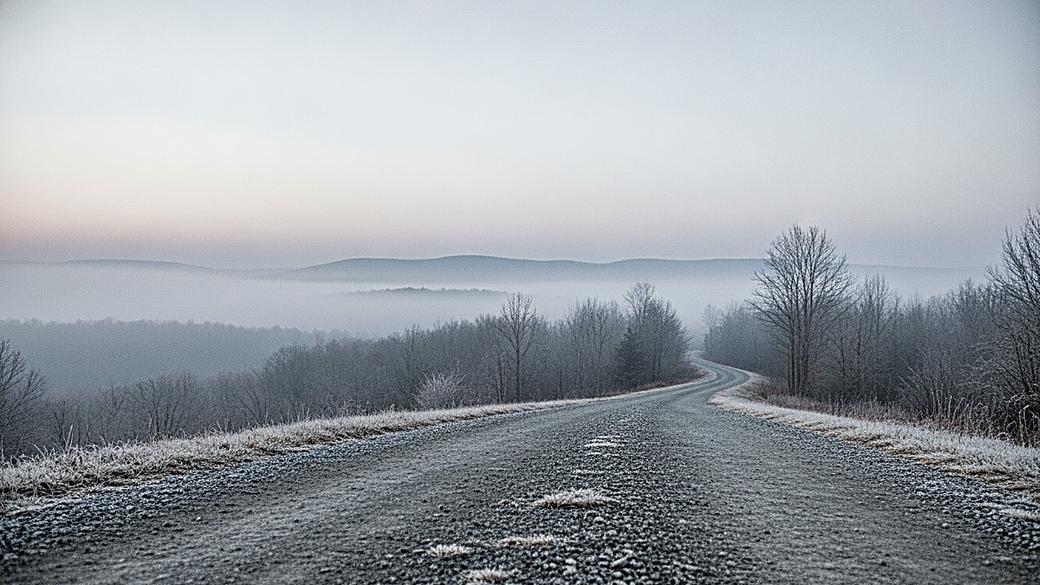
What Is Living on a Mountain in Dahlonega Like When Winter Hits the Roads?
TL;DR, the quick answer
Living on a mountain in Dahlonega comes down to one question a listing photo cannot answer: who is responsible for the last stretch of road to your door. Four different parties can hold that duty, they treat winter very differently, and one of them might be you and your neighbors. Establish which one it is before you write an offer, not the first morning the road glazes over.
Everything stated below about road responsibility comes from the agencies themselves: Lumpkin County Roads and Bridges, the City of Dahlonega, and the Georgia Department of Transportation, read at the time of writing. Staffing, mileage, phone numbers, and published practice all change. This article carries no snowfall figure and no weather statistic, because no issuing weather agency figure was on hand for Dahlonega and the sources that publish one disagree with each other. Confirm anything that affects a purchase with the agency that owns the answer.
Looking at homes up a mountain road?
Gold Peach Realty has completed $250M+ in North Georgia sales. We know which Dahlonega roads are county-maintained, which are not, and which questions to ask before you fall for the view.
Browse Dahlonega homes for saleTable of Contents
- Who actually maintains the road to your door
- What happens to those roads when ice arrives
- What changes when the road is private
- How much of the county is still unpaved
- How road access can affect your financing
- Trading elevation for easier access
- What to check before you buy on a mountain road
- Frequently asked questions
Most people who move to Dahlonega for elevation do their homework on the house and almost none on the road. That is backwards. A mountain home in Lumpkin County is a normal house with a normal inspection, and the thing that will actually shape your winters is the half mile of pavement or gravel between your driveway and the nearest road somebody is obligated to treat.
The good news is that this is knowable before you buy, and it is knowable cheaply. Georgia publishes what the state clears. Lumpkin County publishes what it maintains and even how to tell its roads apart from private ones at a glance. The City of Dahlonega publishes what it is responsible for inside city limits. Put those three answers against a specific address and you know most of what a winter here will feel like.
Who actually maintains the road to a Dahlonega mountain home?
There are four possible answers, and a single drive home can cross all four. The state route you leave town on, the county road you turn onto, a city street if you are inside the limits, and finally the private drive or subdivision road that belongs to the people who live on it.
| Who | What they say they handle | What that means in winter |
|---|---|---|
| Georgia Department of Transportation | Interstates and state routes. Its winter weather page gives the order: "Focus crews first on interstates; then state routes from the most heavily traveled, to the least traveled." | Your route into town gets attention in an order set by traffic volume. How far out you live does not enter into it. |
| Lumpkin County Roads and Bridges | The county road system. Its page states personnel "respond to emergencies 24 hours a day, seven days a week by removing roadway debris, clearing storm related debris from roadways, plowing ice and snow." | County crews do plow and clear, and they are covering a very large system with a small department. |
| City of Dahlonega Public Works | On City-controlled areas, "water, sewer, streets, sidewalks, and storm water infrastructure." | The department page does not mention snow or ice at all, so you have to ask the city what it actually does in winter. |
| A private road or shared drive | Nothing is published, because no agency owns it. The duty sits with whatever the deed, plat, covenants, or a road maintenance agreement say. | If it ices, it is cleared when the owners arrange and pay for it, or it is not cleared. |
Lumpkin County answers the question in its own road FAQ: "All county road name signs should have a green background with lettering. Privately maintained road name signs should be blue with white lettering." So on your next showing, look at the sign color where you turn off. Green suggests the county road system. Blue suggests a road the owners maintain themselves. Treat that as your first read and then confirm it with the county, because a sign is a convention rather than a title record.
What happens to those roads when ice or snow arrives?
Quick answer
The state treats interstates first, then state routes from busiest to quietest, and it says plainly that it "does not clear local roads or roadways leading into subdivisions." Lumpkin County plows ice and snow on the county system around the clock. Everything past the end of a public road is on the owners. Winter access is therefore a question about your last mile, not about the town.
That sentence from the Georgia Department of Transportation is the one worth reading twice, because it is unusually direct for a public agency: "Georgia DOT does not clear local roads or roadways leading into subdivisions." A buyer who assumes the state will eventually get to the road into their neighborhood is planning around something the state has already said it will not do.
What the state does instead is get ahead of the freeze on the routes it owns. Its winter weather page describes brine, where "a mixture of salt and water is used as a preventative treatment and is intended to limit the bonding of the ice to the pavement." That is a pre-treatment. It goes down before the weather arrives, which is also why a route can look wet and still be treated while your gravel road half a mile uphill is not.
The same page gives driving guidance that reads differently once you live on a grade. It tells motorists to "SLOW DOWN to at least half of the normal speed limit and drive in low gear," and to stay at least 100 feet behind a plow truck. For live conditions, the state runs 511GA, its traveler information system, which publishes traffic conditions, incidents, construction, closures, cameras, and weather. It is the right place to look on a bad morning. Bookmark it in advance.
Buyers ask us how bad the winters are here. The winters are mild by mountain standards. What catches people out is the last half mile, because that stretch is often nobody's job but theirs, and nothing in the listing tells them so.
Gold Peach Realty
What changes when the road is private?
A private road is not a defect. Plenty of the most desirable land around Dahlonega sits behind one, and a well-run shared road with a funded maintenance arrangement can be in better shape than a public one. What a private road does is move a set of obligations onto you that most buyers have never had to think about before.
Those obligations are set out in documents recorded against the parcel. The deed and plat establish your legal right to cross to your property. Covenants or a recorded road maintenance agreement, where one exists, set out who contributes to grading, gravel, culverts, and winter clearing, and what happens if a neighbor stops paying. Where no such document exists, the arrangement is whatever the neighbors have informally agreed, which works until the year it does not.
Legal access, easements, and cost-sharing obligations are legal questions with real money attached, and they are decided by the specific wording in the specific documents recorded against that specific parcel. Nothing in this article is legal advice and no general rule substitutes for having a Georgia real estate attorney read your deed, plat, covenants, and any road maintenance agreement during your due diligence period. Ask for those documents early, because tracking down an unrecorded arrangement takes longer than a short inspection window allows.
How much of Lumpkin County is still unpaved?
Enough that you should expect to see gravel on your showing list. The county states it maintains "more than 400 miles of county roadway," made up of "337 miles of paved roads and 75 miles of unpaved roads." So a little under a fifth of the county system is gravel before you count private drives, and private drives are where the steepest surfaces tend to be.
Gravel changes the ownership experience more than it changes the drive. A gravel surface sheds and washes in heavy rain, which is why culverts, ditch lines, and where water leaves the road matter here in a way they do not in a subdivision with curbs. On a county gravel road that upkeep belongs to the county. On a private one it belongs to you, either directly or through whatever the neighbors have agreed to share.
This is also the practical reason to park and walk the road. Look at where water is clearly running across the surface, whether the ditch is cut or filled in, and whether the culvert under the drive is clear at both ends. None of that requires an engineer to notice, and all of it tells you what the last owner did or did not do.
Can road access affect whether a lender will finance the house?
It can. This is the point where a road question turns into a closing question. The Fannie Mae Selling Guide sets a property eligibility standard in section B2-3-01, dated September 2025, requiring that a property be "readily accessible by roads that meet local standards." The same section lists as ineligible "properties that are not readily accessible by roads that meet local standards."
Read that carefully, because it is narrower than the rumors around it. The standard as written is about access by roads meeting local standards. It does not, in that section, say that a recorded maintenance agreement is required, and we are not going to tell you it does. What individual lenders, investors, and loan programs ask for on top of the baseline varies, and the only answer that protects you is the one your own lender puts in writing for your specific address.
Send your loan officer the address, the road name, and whether the sign is green or blue, and ask in writing whether the access satisfies their requirements and whether they will need any access or maintenance documentation. Doing this at pre-approval costs nothing. Doing it three days before closing, when the appraiser has flagged the access and the file has to go back to underwriting, costs you the contract.
Which Dahlonega addresses trade elevation for easier access?
Buyers here sort themselves into three patterns, and each one is really a decision about who carries the road.
In town, on a city street, you have the shortest and flattest run to a grocery store and the fewest unknowns about who owns the pavement, though you should still ask the city directly about winter treatment because its Public Works page does not address it. Out on the county system, you get land and quiet with a road the county maintains and plows, and you accept that a small department is covering hundreds of miles when the weather turns. Behind a private road, you get the settings people picture when they imagine living on a mountain here, and you take on the surface, the drainage, and the winter clearing yourself or with your neighbors.
None of those is the right answer in the abstract. They are three different searches with different inventory and different carrying costs, which is why it is worth naming your pattern out loud before you start touring. Browse current Dahlonega homes for sale and tell us which of the three you are in, and we will filter by access rather than by ZIP code. If the view is the reason you are looking uphill at all, our Dahlonega mountain view homes buyer's guide covers what a view costs and how to check that it stays a view.
What should you check before you buy on a mountain road?
Five checks, in the order they actually matter during due diligence.
- 1
Establish who owns every road between the house and a state routeNote the sign colors on the way in, then call Lumpkin County Roads and Bridges at 706-864-3122 to confirm which segments are on the county system. If the property is inside city limits, put the same question to City of Dahlonega Public Works at 706-864-6133, including whether the city treats that street in winter.
- 2
Get the access documents in front of an attorneyDeed, plat, covenants, and any road maintenance agreement. You want to know that your legal access is recorded and what your share of upkeep is, in writing, while you still have the right to walk away.
- 3
Put the access question to your lender in writingGive them the address and the road detail at pre-approval and ask whether it satisfies their eligibility requirements and what documentation they will want. An access problem found by an appraiser late in the file is the expensive version of this conversation.
- 4
Drive the route in the worst weather you can getRain will show you where water crosses the surface and where the ditches have failed. Fog will show you the sight lines. If you are house hunting in summer, at minimum drive it at night and drive the steepest section downhill, which is the direction that goes wrong first.
- 5
Plan for the days you stay putAsk the sellers and the neighbors how many days a year the road is genuinely impassable and what they do about deliveries, school runs, and getting a car out. Then prepare the house accordingly, which is a separate exercise from preparing the road.
Want the road answer before you fall for the house?
Gold Peach Realty has completed $250M+ in North Georgia sales and works these roads every week. Send us an address and we will help you establish who maintains it before you spend a dollar on diligence.
Search Dahlonega homes for saleCall (770) 283-1223Frequently asked questions about mountain roads and winter access in Dahlonega
Does Lumpkin County plow snow and ice?
Yes, on the county road system. The county's Roads and Bridges page states that department personnel "respond to emergencies 24 hours a day, seven days a week by removing roadway debris, clearing storm related debris from roadways, plowing ice and snow." That coverage applies to county roads, so the first thing to establish for any address is whether the roads you use are actually on that system.
Will the state clear the road into my subdivision?
No. The Georgia Department of Transportation says so directly on its winter weather page: "Georgia DOT does not clear local roads or roadways leading into subdivisions." The state focuses on interstates first, then state routes from the most heavily traveled to the least traveled.
How can I tell if a road is county-maintained or private?
Start with the sign. Lumpkin County states that "All county road name signs should have a green background with lettering. Privately maintained road name signs should be blue with white lettering." That is a fast field check rather than a legal answer, so confirm it with the county at 706-864-3122 and with the recorded documents for the parcel before you rely on it.
How many miles of gravel road are there in Lumpkin County?
The county reports "337 miles of paved roads and 75 miles of unpaved roads," out of "more than 400 miles of county roadway." Gravel is a normal part of this road system, so a gravel approach is not by itself a red flag. What matters is who maintains that particular stretch and how the water comes off it.
How much snow does Dahlonega get?
We are not going to print a number we cannot stand behind. The published figures we could find come from third-party aggregators rather than from a weather agency, and they disagree with one another, so quoting one on a brokerage page would be guesswork dressed up as data. For a forecast, use the National Weather Service. For what the roads are doing right now, use 511GA, the state's traveler information system.
Do I need four wheel drive to live on a mountain in Dahlonega?
That depends entirely on your grade, your surface, and how many days a year you are unwilling to stay home, and it is a question for the people already living on that road. Ask the neighbors what they drive and what they do on the bad mornings. Their answer for that specific road is worth more than any rule of thumb.
Who is responsible for a shared driveway or private road?
Whoever the recorded documents say. There is no agency answer, because no agency owns it. The deed and plat establish access, and covenants or a road maintenance agreement, if one exists, set out cost sharing and enforcement. Have a Georgia real estate attorney read them during your due diligence period.
Can a private road stop me getting a mortgage?
Access is part of property eligibility, so it is a real underwriting question. The Fannie Mae Selling Guide section B2-3-01, dated September 2025, requires a property to be "readily accessible by roads that meet local standards" and treats "properties that are not readily accessible by roads that meet local standards" as ineligible. Requirements beyond that baseline vary by lender and loan program, so get your own lender's answer for your address in writing at pre-approval.
Does the City of Dahlonega treat city streets in winter?
Ask the city. Its Public Works page lists responsibility on City-controlled areas for "water, sewer, streets, sidewalks, and storm water infrastructure," and makes no mention of snow, ice, or winter weather. Do not infer a practice from silence. Call Public Works at 706-864-6133 and ask what they do and in what order.
Where do I check road conditions during a storm?
511GA, the Georgia DOT traveler information system, publishes traffic conditions, incidents, construction, closures, cameras, message signs, and weather. For driving itself the state advises slowing "to at least half of the normal speed limit" and driving in low gear, and staying at least 100 feet behind a plow truck rather than passing it.
Is a steep driveway a deal breaker on a mountain lot?
Not automatically, and plenty of the best sites here come with one. Treat it as a cost and a habit: how the surface is built, where water leaves it, what it takes to keep it usable, and how you feel about it in the dark and in the wet. Drive it downhill before you decide, on a wet day if you can, because downhill on a slick surface is where a steep drive gives you trouble.
Who can help me work this out for a specific address?
A brokerage that works these roads. Gold Peach Realty can walk a shortlist with you, help you establish which segments are county-maintained before you spend money on diligence, and point you to the county, the city, your lender, and a real estate attorney for the answers that should never come from an opinion. Call (770) 283-1223 or email [email protected].
Important: All information in this article is believed to be reliable but is not guaranteed and is subject to change without notice. Road ownership and maintenance responsibility, agency staffing and mileage, winter treatment practice, phone numbers, easements, covenants, road maintenance agreements, and lender eligibility requirements should be independently verified with Lumpkin County, the City of Dahlonega, the Georgia Department of Transportation, your lender, and a licensed Georgia real estate attorney before you rely on them for a real estate or financial decision. This article is provided for informational purposes and does not constitute legal, financial, tax, or investment advice. Gold Peach Realty is a licensed Georgia real estate brokerage, and Nicole Van den Bergh is the broker of record, License 381292. Equal Housing Opportunity.
Last updated:
Categories
- All Blogs (664)
- Achasta Golf Community (78)
- Cleveland, GA (47)
- Dacula, GA (43)
- Dahlonega GA (166)
- Dawsonville, GA (46)
- Forsyth County, GA (2)
- Gainesville, GA (47)
- Gold Peach Realty (36)
- Helen, GA (44)
- Home Buying Tips (42)
- Home Décor And Interior Design (7)
- Home Improvement Tips (15)
- Home Selling Tips (29)
- Homes For Sale (56)
- Lake Lanier, GA (72)
- Land & Acreage (2)
- Local Events (13)
- Local Guides (27)
- Luxury Real Estate (3)
- Market Reports (17)
- Mortgage And Finance Tips (27)
- New Construction (2)
- North Georgia (47)
- Relocating To North Georgia (19)
Recent Posts
GET MORE INFORMATION