Cleveland, GA Cabins and Mountain Homes: What Buyers Need to Know
TL;DR, the quick answer
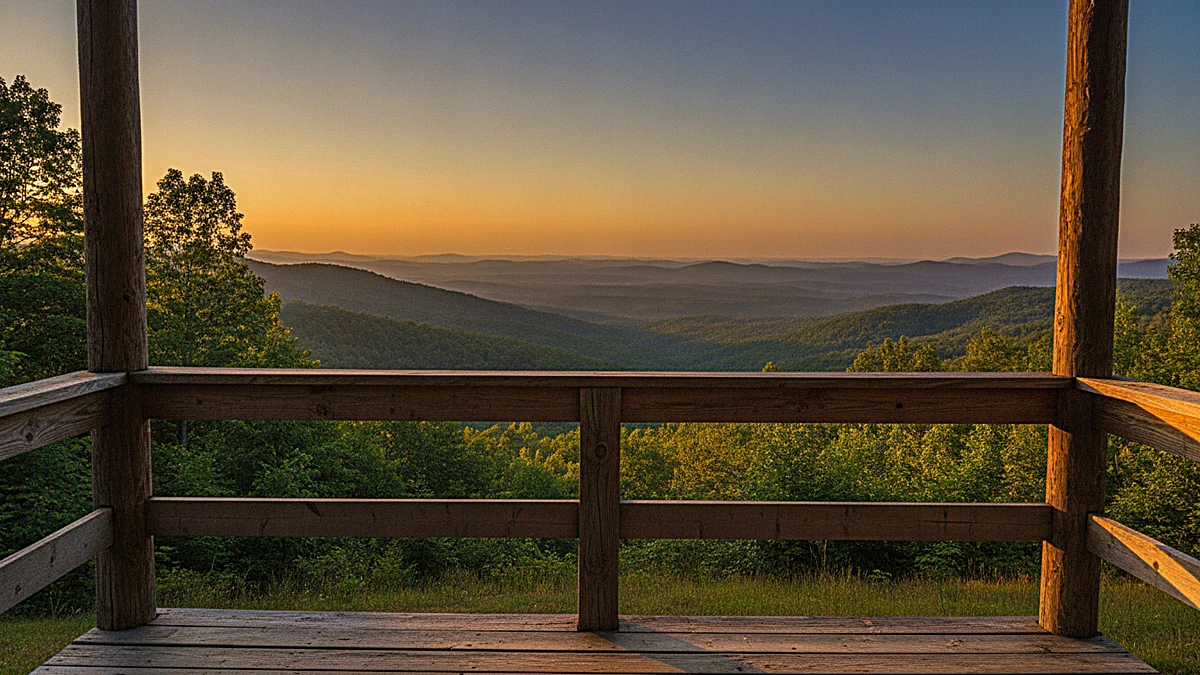
Cabins around Cleveland sit in unincorporated White County, where two county rules decide most of what a buyer can do with one. Short-term renting requires a host license, the county caps those at 650, and a cabin inside a mapped platted subdivision cannot get one at all unless the covenants specifically allow it. Steep lots also fall under mountain and hillside protection at 25 percent slope, which limits how much of the lot you may disturb and keeps houses off the ridge itself.
About the figures and citations in this article
Every ordinance figure below was read on August 8, 2026 from White County's own published documents, which are linked in the section where each figure appears. Two notes on what is deliberately absent. First, this article prints no prices, no median, and no inventory count: cabin pricing in White County moves with acreage, slope, road access and rental history, and a number typed into an article ages badly, so current inventory is left to the live listing feed on Cleveland, GA homes for sale. Second, the county ordinance sets a ceiling of 650 host licenses but no page published a running count of how many are active today, so this article does not state one; the Business Tax Office at 706-865-2235 is the only place that number is current. Ordinances change, and codes are published on a lag.
On this page
- What you are actually buying around Cleveland, GA
- Can you rent a Cleveland, GA cabin out short term?
- The rule that ends most cabin income plans before they start
- Buying a cabin that already has a license: the sixty-day clock
- What the host license costs, and what it obligates you to do
- Mountain and hillside protection: what you can build on a steep lot
- Septic, wells and water on a mountain lot
- How to verify a specific Cleveland cabin before you make an offer
- What this means if you are buying or selling a cabin here
- Frequently asked questions
What you are actually buying around Cleveland, GA
Cleveland is the county seat of White County, a town of 3,514 people at the 2020 census sitting at about 1,572 feet of elevation, covering 3.93 square miles. Those numbers matter less than what they imply: the city itself is small, and almost everything a buyer pictures when they search for a cabin here is outside the city limits, in unincorporated White County. That distinction is not trivia. It decides which rulebook applies to the property, and the two are not the same.
The practical geography is that Cleveland sits at the road junction everyone passes through on the way somewhere else, with Helen to the north and the Chattahoochee National Forest wrapped around the county. That is exactly why the cabin market here exists, and why so many buyers arrive with a rental income assumption already baked into their budget. Before that assumption survives contact with the county code, there are two rules worth knowing.
| Where the property sits | Who writes the short-term rental rules | Who to call first |
|---|---|---|
| Unincorporated White County (most cabins) | White County Board of Commissioners, White County Code Chapter 16, Article II | Business Tax Office, 706-865-2235 |
| Inside Cleveland city limits | City of Cleveland, its own ordinance | Cleveland City Hall, (706) 219-3220 |
| Inside the city of Helen | City of Helen, its own ordinance | City of Helen |
This article covers the county ordinance in detail. Rules for property inside Cleveland or Helen city limits are set separately by those cities and are not described here. Confirm the jurisdiction of a specific parcel before relying on any of it.
See what is actually for sale around Cleveland right now
Cabins, mountain homes and acreage across White County, updated from the live listing feed rather than a number typed into an article.
Browse Cleveland, GA homes for saleCan you rent a Cleveland, GA cabin out short term?
Yes, but not automatically, and not everywhere. White County adopted its short-term rental host license ordinance as Resolution No. 2024-01, passed January 8, 2024 and effective January 31, 2024. It lives at White County Code Chapter 16, Article II, and it defines a short-term rental as "A lodging accommodation offered to transient guests for a period of time not to exceed 30 consecutive days." That 30-day line is the whole test. Anything under it is a short-term rental and needs a license.
The ordinance is explicit about its reach. Its definitions section states, "County. Unincorporated White County." and Sec. 16-203(d) repeats it: "This license applies to all short-term rentals in unincorporated White County." So a cabin two miles outside town is squarely covered, while a house inside the city limits is governed by the city instead. Group homes, campgrounds, RV parks, bed and breakfasts, motels and hotels are excluded from this particular requirement (Sec. 16-201), though they carry their own obligations.
The number most people repeat about White County is the cap, and it is real. Sec. 16-202 of the ordinance provides that "the maximum number of host licenses to be issued and to be active at any time shall be 650." That is a ceiling on the entire unincorporated county, not a per-subdivision or per-district figure. Whether the county is currently at that ceiling is a question only the Business Tax Office can answer on the day you ask, and it is worth asking before you write an offer that depends on the answer.
650
host licenses is the countywide ceiling
60 days
for a new owner to apply after closing
$125.00
host license fee per rental property
25%
slope that triggers mountain protection
The rule that ends most cabin income plans before they start
This is the provision that surprises people, and it is the single most expensive thing to learn after closing rather than before. Sec. 16-202 states: "A license will not be issued to any property located in a platted subdivision as depicted on the adopted map established for this purpose as referenced in Section 16-208 of this article, unless the subdivision has covenants which specifically allows for short-term rentals."
Read that twice, because the default runs against the buyer. If the cabin sits in a platted subdivision shown on the county's official map, the answer is no license , unless the recorded covenants affirmatively permit short-term rentals. Silence in the covenants is not permission. A neighbor who rents does not establish it either; that owner may hold a license predating the map, or may simply not have been caught yet. The county requires an applicant in a platted subdivision to execute an affidavit swearing the covenants do allow it, and Sec. 16-206(a)(7) notes that false execution of that affidavit is punishable by law.
The map is the controlling document, not anyone's recollection. Sec. 16-208 provides that "the official subdivision map shall be located in the office of Community and Economic Development and shall be the final authority as to the current subdivisions in the county." Its stated purpose is to identify platted subdivisions of common development of 4 or more lots so that those subdivisions are excepted from short-term rentals in residential land use districts unless the covenants specifically allow it.
The question to ask before you write the offer
Two answers decide whether a cabin can ever be licensed as a short-term rental: is this parcel on the official subdivision map, and if so, do the recorded covenants specifically allow short-term rentals. The first is answered by Community and Economic Development, the second by reading the covenants recorded with the Clerk of Superior Court. Neither is answered by a listing remark. The Planning Department line is 706-865-6768.
There is one carve-out worth knowing, because it is genuinely aimed at cabins. Sec. 16-202 provides that "Properties permitted as a vacation rental tourist cabin development as defined by Article VII of the White County Code of Ordinances will be issued a license according to the provisions of this chapter." If a property was permitted under that older tourist-cabin framework, it is licensed under this chapter rather than shut out by it. That status is a matter of county record, so verify it rather than assume it.
Buying a cabin that already has a license: the sixty-day clock
A licensed short-term rental does not stay licensed just because you bought it. Sec. 16-203(c) is direct: "Short-term rental host licenses are non-transferable." The license belongs to the owner who applied for it, and it does not ride along with the deed.
What the ordinance gives a buyer instead is a window, and the terms of that window are unusually generous if you use it. The same subsection provides that "If a property covered by a host license is sold or is otherwise transferred to a new owner, the new owner has sixty (60) days to apply for a host license under the same rights and privileges afforded to the prior owner such as grandfathered status and maximum license to be issued." In plain terms: you have 60 days from the transfer to apply, and if you apply inside it, you step into the prior owner's position rather than the back of the line. That matters most where the countywide ceiling is concerned, because it means an existing licensed cabin can carry its slot to you.
Miss the 60 days and you are an ordinary new applicant, subject to the cap and to every eligibility rule above, on a property you bought assuming otherwise. This is the deadline to put in the closing file the day the contract is signed, not the week it expires. Grandfather-status questions go to the Business Tax Office; the county directs exactly that: "For questions regarding grandfather status for short-term rentals, host license, business license, or hotel/motel tax, contact the Business Tax office at 706-865-2235."
The rental question is almost always asked after the offer is accepted, and that is the expensive order to ask it in. Two phone calls before you write, one to Planning about the subdivision map and one to the Business Tax Office about the license, cost nothing and settle whether the income half of the plan is real. A cabin that cannot be licensed is still a fine cabin. It is just a different purchase than the one the buyer thought they were making.
Gold Peach Realty, North Georgia buyer representation
What the host license costs, and what it obligates you to do
The ordinance itself does not name a dollar figure. Sec. 16-203(a) defers it: "The annual fees for the issuance of a short-term rental host license shall be established by resolution and shall be set forth in the schedule of fees and charges on file in the county clerk's office." The current schedule is published in the county's own application package, which states: "The Occupational Tax fee is based on the fee schedule outlined on the form (# of employees + a one-time $25 admin fee) and the STR Host License is $125.00 per STR property." So the host license runs $125.00 per rental property, alongside an occupational tax certificate with a one-time $25 administrative fee.
The license is annual, not perpetual. It expires December 31 each year and must be renewed (Sec. 16-203(b)), with a penalty of 10 percent per month on payments made after that date (Sec. 16-203(e)). Operating more than 30 days without the license, whether or not the cabin is actually rented, draws a warning plus a penalty of 3 times the license fee, and a citation if that is not paid within 10 calendar days (Sec. 16-203(f)).
The operating conditions that come attached
The general provisions at Sec. 16-206 attach real duties to the license. The ones that most often change how an owner runs the property:
- A responsible party available 24 hours per day, seven days per week, who must respond to complaints within 2 hours and take remedial action. For an out-of-state owner this usually means paying someone local.
- Insurance: "Provide proof that the owner has commercial or specific short-term rental insurance for the property." A standard homeowner's policy is generally not that (Sec. 16-206(a)(11)).
- An approved Short-Term Rental Eligibility Form from the Planning Office before the license issues (Sec. 16-206(a)(1)).
- The license number in every advertisement the property runs (Sec. 16-206(a)(4)).
- Parking confined to the driveway or garage, not the right-of-way or unimproved grass (Sec. 16-206(a)(8)).
- Check-in and departure activity between 6:00 a.m. and 10:00 p.m. (Sec. 16-206(a)(13)).
- Posted information inside the cabin including the responsible party, the street address, a floor plan showing fire exits, and the maximum occupancy load (Sec. 16-206(a)(2)c).
Enforcement escalates on a fixed ladder rather than at an inspector's discretion, which is worth understanding before you buy a cabin with a complaint history: Sec. 16-207(b) sets a warning on the first violation, a 30-day suspension on a second of the same nature within 12 months, and revocation on a third, after which the owner may not reapply for that property for 12 months.
Mountain and hillside protection: what you can build on a steep lot
The second county rulebook has nothing to do with renting and everything to do with building. White County protects its mountains and hillsides under White County Code, Appendix C, Article VIII, the Standards and Regulations for the Protection of Mountains and Hillsides. A protected mountain or hillside is defined as: "All land or tract of land that is shown on the mountain and hillside protection district map as lying within protected districts as designated by district map and is further described as those mountains and hillsides where the slope becomes 25 percent or greater, and which specifically include the ridges, summits and such crests above these areas, even though the slopes may be less than 25 percent."
Two things follow from that definition. The 25 percent slope threshold is the trigger most lots hit, and the ridges and summits above those slopes are swept in even where the ground itself is flatter, so a gentle building pad on top of a steep hill is still regulated. The county is direct about what happens next: "In instances of building or clearing in protected areas, contact the Planning Department for a pre-application meeting. A mountain protection plan will be required, as well as the appropriate land disturbance filing."
The slope density matrix
This is the table that decides how much house a steep lot can hold. Average slope drives the minimum lot size, the share of the lot you may disturb, and the share you may cover with impervious surface:
| Average slope of lot to be developed | Minimum lot size (acres) | Maximum percent of lot that may be disturbed | Maximum percent of lot that may be impervious surface |
|---|---|---|---|
| 25-29% | 1.5 | 30% | 20% |
| 30-34% | 2.0 | 25% | 15% |
| 35-39% | 2.5 | 20% | 10% |
| 40% or more | 3.0 | 17% | 5% |
Source: White County Mountain Protection Checklist, Single Family Residential. Lots of record as of November 29, 2005 consisting of 1.5 acres or less are not subject to these land disturbance limitations, though no more than 50 percent may be disturbed.
The practical reading: a lot in the steepest band (40% or more) needs 3.0 acres and lets you disturb 17% of it, against 1.5 acres and 30% in the 25-29% band. Two listings of the same acreage can therefore support very different houses. If you are buying land in Cleveland, GA to build on rather than an existing cabin, this table is the first thing to check against the survey, before elevations or floor plans.
Height, ridgelines, lighting and trees
The checklist that accompanies a mountain protection plan adds constraints that shape the finished house more than most buyers expect. Structure height may not exceed 40 feet from natural grade. The rule on ridgelines is stated plainly: "Ridgelines shall be left in their natural state, except roadways may be constructed along the ridgeline." In other words the road may run along the crest, but a house may not be sited on the ridge itself. Outdoor lighting must use shielded fixtures that direct light downward, and light poles may not exceed the height of surrounding buildings.
You may need a permit to cut a tree on your own land
This one catches new owners. The county's tree-cutting application states: "This application applies to any cutting of trees eight inches, or greater, in diameter as part of the ongoing maintenance of property in a Mountain and Hillside Protection area- which does not require a land disturbing permit or building permit." It requires a plat and a mountain protection plan, and the application adds that a "$100 fee will be assessed for permit issuance". Separately, on view clearing, the county's position is that trees can be staggered cut for view, but no clear cutting for view. If the reason you want the lot is the view, ask the Planning Department at 706-865-6768 what you may legally remove before you pay for the view.
Septic, wells and water on a mountain lot
Most cabins outside the city are on a private septic system and many are on a private well. Those are permitted and inspected by White County Environmental Health, part of District 2 Public Health, at 1241 Helen Highway, Unit 205, Cleveland, GA 30528, reachable at 706-348-7698. Its published services include "Inspections and permitting of individual sewage systems and individual wells", "Collection of water samples from individual wells for analysis", and "Reviews and approves proposed subdivisions for septic tank systems and individual wells".
Two things to line up during due diligence. First, ask for the septic permit and the system's as-built location; a cabin marketed as sleeping ten on a system sized for a three-bedroom house is a licensing and capacity problem, not a detail, because the occupancy load on a host license application has to be one a septic system can actually carry. Second, if the cabin is on a well, have the water tested rather than assuming: the health department collects samples from individual wells for analysis, and that is a far cheaper answer than a post-closing surprise.
These two rulebooks also intersect on paper. A mountain protection site plan must show "Proposed screening locations, retaining walls, building footprint, driveway, septic tank, drain field locations, and areas reserved for alternate septic systems shown on plan" Note that last item. On a steep lot the county expects a reserve drain field area to be identified, which is one more reason the buildable footprint on a mountain parcel is smaller than the acreage suggests.
Not sure which rules land on the cabin you are looking at?
Send us the address. We will tell you which jurisdiction it sits in, what the subdivision map shows, and what to verify before you write the offer.
Talk to a North Georgia REALTORHow to verify a specific Cleveland cabin before you make an offer
None of the above requires a lawyer to check. It requires four phone calls and a document request, in this order, and all of it can be done inside a normal due diligence period. The numerals below are written out because the order genuinely matters: each step can make the next one unnecessary.
- 1. Confirm the jurisdictionEstablish whether the parcel is in unincorporated White County, inside Cleveland city limits, or inside Helen. The county ordinance described here governs only the unincorporated county. City parcels answer to City Hall, (706) 219-3220.
- 2. Check the parcel against the official subdivision mapAsk Community and Economic Development whether the property appears on the Official Subdivision Map. That map, not a listing remark or a neighbor, is the final authority on which subdivisions exist for this purpose. Planning: 706-865-6768.
- 3. If it is mapped, read the recorded covenantsPull the covenants from the Clerk of Superior Court and look for language that specifically allows short-term rentals. Silence is a no. This is the step that most often ends a rental income plan, and it costs nothing but time.
- 4. Ask the Business Tax Office about license status and availabilityConfirm whether the property currently holds a host license, whether any grandfathered status attaches, and where the county stands against its countywide ceiling. Business Tax Office: 706-865-2235. If a license exists, calendar the 60-day application deadline from the closing date.
- 5. Check slope and mountain protection before you plan any changesIf you intend to build, add a garage, widen a drive or clear for a view, ask Planning whether the parcel is in a mountain and hillside protection area and request a pre-application meeting. Bring the plat. Confirm what tree cutting requires a permit.
- 6. Verify septic capacity and well waterRequest the septic permit and as-built from White County Environmental Health at 706-348-7698, match the system's capacity to the occupancy you actually intend, and have well water tested.
What this means if you are buying or selling a cabin here
For buyers, the honest summary is that a Cleveland-area cabin is usually a good purchase and sometimes a good business, and those are two different underwriting exercises. If the income matters to whether the numbers work, verify the licensing path before you remove contingencies, not after. If it does not, most of this article becomes background and the mountain protection rules become the part that actually shapes your plans. Buyers who want the cabin feel without the steep-lot rules sometimes end up comparing against cabins for sale in Dahlonega or looking more broadly at North Georgia homes for sale before settling on White County.
For sellers, the same facts run the other direction and they are an asset. A cabin with a current host license, a clean complaint record, covenants that permit short-term rentals, and a septic permit matching its advertised occupancy is materially easier to sell than an identical cabin without that file, because the buyer's biggest unknown is already answered. Assembling that documentation before listing is one of the highest-return hours a seller here can spend. If you are weighing it, start with what your home is worth and we will tell you which documents are worth pulling first.
Cleveland rewards buyers who do the homework, and the town is more interesting than its through-traffic reputation suggests. The history of Cleveland, GA goes back to the county's founding, and there is no shortage of day trips from Cleveland once you are here. When you are ready to see what is available, Cleveland, GA homes for sale is the live feed, and you can reach Gold Peach Realty at (770) 283-1223.
Frequently asked questions
Can you short-term rent a cabin in Cleveland, GA?
In unincorporated White County you can, but only with a short-term rental host license issued under White County Code Chapter 16, Article II, plus an occupational tax certificate and authority to collect and remit hotel/motel taxes. A property inside Cleveland or Helen city limits is governed by that city's own ordinance instead.
What counts as a short-term rental in White County?
The ordinance defines it as "A lodging accommodation offered to transient guests for a period of time not to exceed 30 consecutive days." Group living or group homes, campgrounds, RV parks, bed and breakfasts, motels and hotels are excluded from this requirement.
How many short-term rental licenses does White County allow?
Sec. 16-202 provides that "the maximum number of host licenses to be issued and to be active at any time shall be 650." That is a ceiling for the whole unincorporated county. How many are active on any given day is not published, so confirm current availability with the Business Tax Office at 706-865-2235.
Can I get a rental license if the cabin is in a subdivision?
Only if the recorded covenants specifically allow short-term rentals. The ordinance states a license will not be issued to a property in a platted subdivision shown on the county's adopted map unless the covenants specifically allow it, and an applicant must execute an affidavit to that effect.
Does a short-term rental license transfer when I buy the cabin?
No. "Short-term rental host licenses are non-transferable." The new owner has 60 days from the transfer to apply under the same rights and privileges as the prior owner, including grandfathered status. Miss that window and you apply as a new applicant.
What does a White County short-term rental host license cost?
The county's application package states the host license is $125.00 per short-term rental property, alongside the occupational tax fee and a one-time $25 administrative fee. The license expires December 31 each year and must be renewed.
Do I need special insurance to rent my cabin short term?
The ordinance requires you to "Provide proof that the owner has commercial or specific short-term rental insurance for the property." A standard owner-occupied homeowner's policy generally does not satisfy that, so price the correct policy before you build a rental pro forma.
What happens if I rent without a license?
Operating more than 30 days without the required license, whether or not the property is rented, draws a warning and a penalty of 3 times the license fee due, with a citation if that is not paid within 10 calendar days.
What is a protected mountain or hillside in White County?
Land shown on the mountain and hillside protection district map, described as those mountains and hillsides where the slope becomes 25 percent or greater, and specifically including the ridges, summits and crests above those areas even where the slope there is less.
How much of a steep lot can I actually build on?
It depends on average slope. In the 25-29% band the minimum lot size is 1.5 acres with up to 30% of the lot disturbed; at 40% or more it is 3.0 acres with up to 17% disturbed. Impervious surface is capped separately.
Can I build my cabin on top of the ridge for the view?
No. The county states: "Ridgelines shall be left in their natural state, except roadways may be constructed along the ridgeline." A road may follow the crest, but a house may not be sited on the ridge itself. Structure height is also limited to 40 feet from natural grade.
Do I need a permit to cut trees on my own mountain lot?
In a mountain and hillside protection area, yes, for trees 8 inches or greater in diameter cut as ongoing maintenance where no land-disturbing or building permit is otherwise required. It requires a plat and a mountain protection plan, and a $100 fee is assessed for permit issuance.
Can I clear-cut for a view?
No. The county's tree-cutting-for-view position is that trees can be staggered cut for view, but no clear cutting for view. Confirm what you may remove with the Planning Department at 706-865-6768 before buying a lot for its view.
Who permits septic systems and wells around Cleveland?
White County Environmental Health, part of District 2 Public Health, at 1241 Helen Highway, Unit 205, Cleveland, GA 30528, phone 706-348-7698. It handles inspections and permitting of individual sewage systems and individual wells, and collects well water samples for analysis.
What do cabins cost around Cleveland, GA?
This article does not print a price figure, because cabin pricing in White County varies widely with acreage, slope, road access, well and septic condition, and rental history, and a number written into an article goes stale quickly. The current live listing feed is at Cleveland, GA homes for sale, or call (770) 283-1223 and we will pull comparables for the specific type of cabin you want.
Important: This article summarizes ordinances as published on the dates noted and is provided for informational purposes only. It is not legal advice and it is not a substitute for confirming current requirements with White County, the City of Cleveland, the City of Helen, White County Environmental Health, or a Georgia attorney. Ordinances change and published codes lag adoption. Property data including HOA dues, covenants, road ownership, septic capacity, license status, school district boundaries and market statistics should be independently verified by the buyer, seller, or their licensed representative before any real estate decision. Gold Peach Realty is a licensed Georgia real estate brokerage serving Dahlonega, Lumpkin, White, Hall and Dawson counties, reachable at (770) 283-1223 and [email protected]. Broker of record Nicole Van den Bergh, Georgia License 381292. Equal Housing Opportunity.
Last updated:
Categories
- All Blogs (664)
- Achasta Golf Community (78)
- Cleveland, GA (47)
- Dacula, GA (43)
- Dahlonega GA (167)
- Dawsonville, GA (46)
- Forsyth County, GA (2)
- Gainesville, GA (47)
- Gold Peach Realty (36)
- Helen, GA (44)
- Home Buying Tips (42)
- Home Décor And Interior Design (7)
- Home Improvement Tips (15)
- Home Selling Tips (29)
- Homes For Sale (56)
- Lake Lanier, GA (72)
- Land & Acreage (2)
- Local Events (13)
- Local Guides (27)
- Luxury Real Estate (3)
- Market Reports (17)
- Mortgage And Finance Tips (27)
- New Construction (2)
- North Georgia (45)
- Relocating To North Georgia (19)
Recent Posts


GET MORE INFORMATION